Hills Billy Cart Challenge
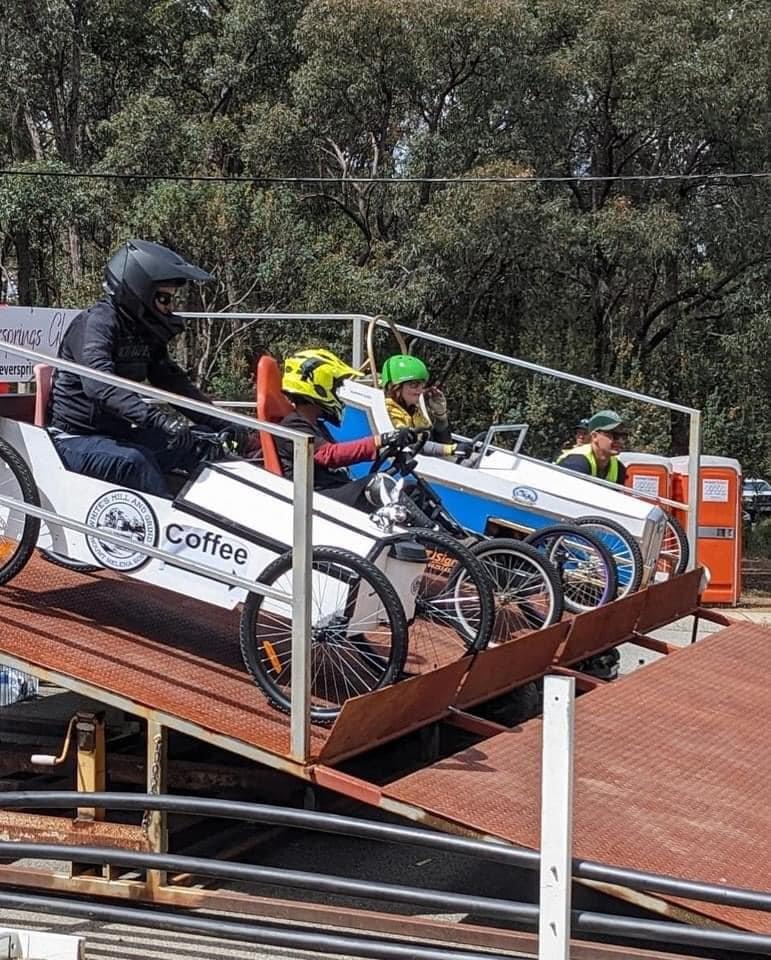
Hills Billy Carts is a group of members dedicated to reviving the joy of simple outdoor fun through the timeless activity of billy cart racing.
In an era dominated by digital entertainment, our challenges offer a nostalgic and refreshing experience for families, schools, hobbyists, and corporate groups. Located alongside the amazing Wundowie Iron FestiVAL, we bring together the community to create lasting memories and foster a spirit of adventure and camaraderie.
Thinking of taking part?
We encourage everyone to join in & have fun.
Next Steps:
We take safety very seriously so check out our position on safety
Read the Rules and General Building Notes & Self Assessment Checklist before you Register to compete
Need some inspiration?
Hills Billy Carts members alongside the Wundowie Men's Shed hold regular get togethers to compare builds and work through problems together. Just ask the team about when the next meet is.
Past Event photos


Build and Safety guidelines
Billy Cart Technical Requirements
This is an event for Billy Carts (Unpowered) of the following configuration,
The Cart: -
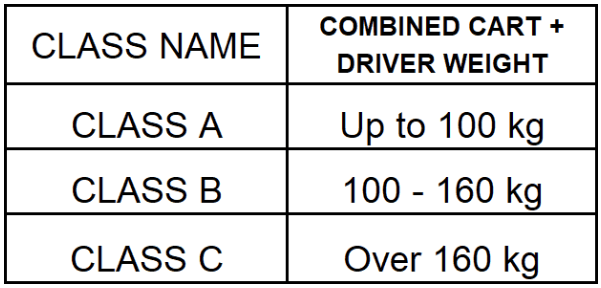
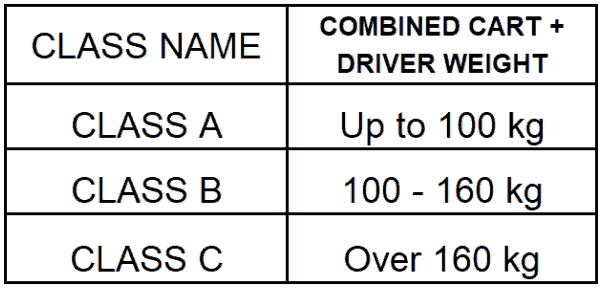
1. shall, with driver not exceed 66.6kgs for the Little Devils Class, 100kg for Class A, 130kgs Class B, 160kgs Class C. All carts and driver configurations over 160 kg to register in the Class D.
2. shall have as its only form of propulsion gravity, on the event downward sloping course.
3. may have 3 or 4 road wheels that must be rubber tyred and no greater than 700mm diameter. Rim and Spokes must be metallic. (if a 3 wheeled design, the single wheel MUST be at the rear)
4. must have the front wheels steered by metallic mechanical means.
5. may not be of a steered front axle design.
6. Finished dimensions must not be longer than 2200mm or wider than 1000mm.
7. must have a wheelbase to track ration greater than 1.5:1.
8. must be fitted with working effective rear brakes to both wheels capable of holding the Cart on a 30-degree slope or withstand a force equal to 50% of weight of the cart and driver applied horizontally in a forward direction. (May be foot or handle bar operated).
9. no part of the Cart may be higher than 950mm measured from the ground, except a Roll bar if fitted.
10. shall have only one occupant at a time, except Parent assisted Child configurations (Tandem).
11. must be occupied by a seated driver who must have their feet in the forward position.
12. have a floor of sufficient strength to hold the driver and prevent contact with the road.
13. has a seat or seating position designed to minimise driver contact with the rear wheels.
14. have a seated drivers eye level of at least 600mm measured from the ground (except persons less than 1200mm tall)
15. have a ground clearance of greater than 75mm, no sharp protrusions and all fittings and fixtures securely mounted.
16. be fitted with a towing eye at the FRONT and REAR with a minimum 30mm hole.
17. Must have 2 sections for race numbers. A section at the front of the cart for a number plate, forward facing, 200mm wide by 150mm high, for each drivers entry number. Also same sized section on Left Side of cart for 2nd number sticker for scoring team to clearly identify.
The Driver during the event will:
A. wear a correctly fastened, approved bicycle helmet or motorcycle helmet.
B. wear knee, elbow, hand and eye protection.
C. wear closed shoes or boots.
D. make these items available for inspection during cart scrutineering.
E. wear a coloured wristband supplied by the event pit crew at all times.
General Advice to Builders and Participants
1. As this event is for unpowered vehicles the greatest advantage will be weight hence the three maximum weight classes. Aim to be at the high end of your selected class to maximise your opportunities.
2. A Cart built with two large diameter rear wheels could offer as an additional form of propulsion the so-called wheelchair effect hence the choice of wording in #2 of Regs and the event organisers desire to forbid such hand operation or assistance to the Cart.
3. While the organisers are keen for an experimental approach and accept the use of both three and four wheeled designs, single front wheeled designs are less stable on the event track. Single wheels must be at the rear only in consideration of this. Cart builders will gain a significant advantage if they minimise wheel bearing drag and make use of light lubrication. Well inflated tyres offer a far better advantage over soft and flexing tyre sidewalls.
4. Requirement #4 has been worded to discourage the use of string or rope as the steering method and the event organisers strongly recommend the use of sound engineering principles around the steering geometry. With consideration for Ackerman and caster principles. Ackerman being the principle in steering systems that causes the outer front wheel to turn less then its paired inner wheel. There are many excellent references and sketches just a Google away on the Ackerman principles. While the Caster action of each wheel can best be described as the principle that causes the steered wheels to both tilt as steered and offer a self-centring action for the steered wheels, think shopping trolley. Again, a greater understanding of this can be found with a Google search. Links available below.
5. Requirement five has been worded to prevent the use of steered front axles designs that become very unstable during steering and under some circumstances can induce roll over. Steered axle designs retain both wheels in alignment and pivot around the centre of the axle.
6. These dimensional requirements are devised from the established practice of other similar events and can be tested during your build by simply placing two sheets of plywood the defined distances apart and ensuring the cart then fits between them. An alternate pre-event testing of these dimensions can also be done using a large cardboard box and a wall. The event organisers will allow slight increases on these dimensions by pre-event application where the oversize cart has previously competed in a similar event and can demonstrate that entry occurred. However, the entry will be shown in the event program as by invitation.
7. Another dimensional rule based on both fairness and sound engineering principles. Wheel base is the measurement from the centre of each steered wheel to the centre of the rear wheels. Track is the measurement taken at the centre of paired wheels in the tyre surfaces that make contact with the ground. Below is an excellent simple drawing of the two principles and a thanks to Wikipedia. The ratio 1.5:1 means that a reasonable state of forward movement stability can be enjoyed.
8. While a far greater braking experience can be found with road going automobiles on the front brakes the event organisers are concerned that front brakes not balanced to perfection and reliability can induce a self-steering effect. Some rear brake imperfection will also impact stability; however, the effect is always less dramatic.
9. Again, sound engineering principles are being applied here where carts with high centres of gravity and maximum widths of 1000mm will be more prone to a roll over in severe cornering moments. However, if a roll hoop is considered a desirable addition by a cart builder then it needs to extend higher than the helmet of the driver(s) as well as a little greater then the shoulder width of the driver.
10. This is really just about mass and design strength in the fairly small (2200mm x 1000mm) area available. However, the exception is for parents who are keen for the experience of this activity to extend to a younger child and Cart builders may well find the best arrangement would be to have the child seated between the legs of the parent with the ability to control both steering and brakes. Limiting steering activity to the child. Give consideration to facial protection and steering wheel contact under sudden braking.
11. This requirement has been introduced in conjunction with #14, to ensure the toboggan approach to air streamlining is not used. (Lying prone on the Cart)
12. A sound floor of folded and ridged sheet metal or wood fixed to a steel framed Cart chassis will offer a great base for the mounting of a seat, possibly the support for the steering column and side plates should there be a desire to feature signage. The self-testing of such a floor can be as simple as its ability to support the weight of the driver standing on it. Number space on floor is self-explanatory.
13. It is assumed that some Cart builders will look to mounting a plastic moulded seat from a discarded chair, consideration of strong mounting of the seat is important. However, others may look to a cushioned seating space formed by the floor and extended up as a seat back and supported with two sides that will also work as a method to prevent contact with the rear wheels. If builders are looking for an optimum rear seat back angle 21 to 23 degrees is very common in well sorted clubman style cars. The use of multiple thickness floor and seat back cushions then makes accommodating differing sized drivers very easy. A 10 to 12 degree slope of the seat base also offers a far better feel, support and slightly bent knee seating position.
14. This requirement is designed to ensure fairness in terms of streamlining as well as sensible visual outlook for the drivers. Common sense is applied to those who are physically very short.
15. This requirement is a simple practical measure to minimise the possibility of grounding the Cart and spoiling the driving experience during the competition. Self-testing by Cart builders over a 75mm block of wood during the early build process is recommended. There will be no significant gain from making the Cart with a ground clearance of less than 75mm. No sharp protrusions the challenge here is to not get injured walking around the Cart. All fixtures and fittings securely mounted is just another common sense provision, as a rule of thumb any mounted item should be able to withstand a force three times its own mass.
16. This requirement calls for a suitable towing eye for events where a tow back to start, facility is available and once again some common sense will need to be applied in respect of suitable strength to tow up hill, a cart and occupant.
17. For identification purposes, Carts must be well numbered, with large enough sections on the front facing forwards, and on the drivers left hand side (wherever convenient) for the timing crew to se clearly when the carts are whizzing past the finish line. Cart numbers will be handed out on the final scrutineering session or on race day, as deemed appropriate on a case by case situation. No cart numbers are supplied until a cart has officially passed scrutineering and is safe and ready for racing.
Driver apparel items A to D above.
In each case the intent of the event organisers is to minimise skin graze and suggest protection inspired by bicycle and skateboard users.
A. A helmet just offers that level of protection to the lump on top of your shoulders that sometimes makes contact with harder items. Bike type helmets are both less expensive and lighter. However, the event organisers accept the use of motorcycle helmets as well. Mention of correctly fastened cannot be overstated.
B. Knee, elbow, hand and eye protection from light grazing dust or debris is the intent here and might take the form of knee and elbow pads or heavy material overalls. Gloves as simple as light rubberised fabric garden gloves through to exotic leather materials will be accepted. Any form of eye covering from visors, spectacles or sunglasses will be accepted.
C. This is just to stop the bare foot brigade and calls for a complete foot covering. Stout shoes, sneakers or work boots will all be considered fine. Heavy boots may help fine tune the weight class but may reduce brake pedal control.
D. During scrutineering as well as the technical requirements, measurements and weights of the cart and driver, a confirmation the driver has this equipment is important.